编写高中英语校本课程教案时,关键在于体现“校本”特色,即:不局限于国家统编教材,而是根据学校特色、学生兴趣或当地文化来设计内容。
以下为您提供一份通用的教案模板,以及两个不同主题的完整教案范例(一个侧重文化素养,一个侧重实用技能),供您参考。
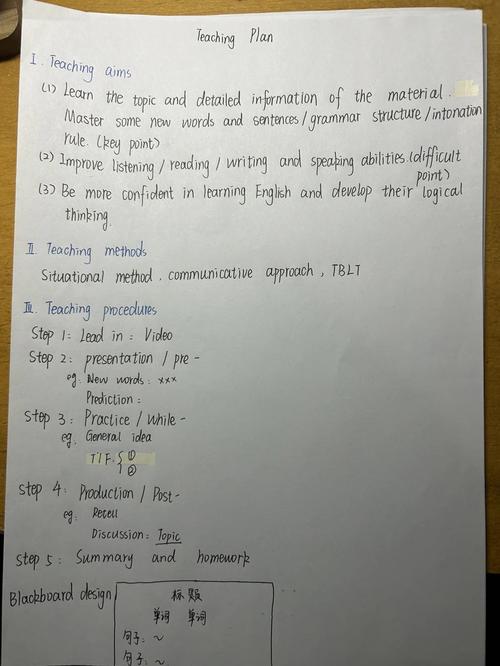
第一部分:高中英语校本课程教案通用模板
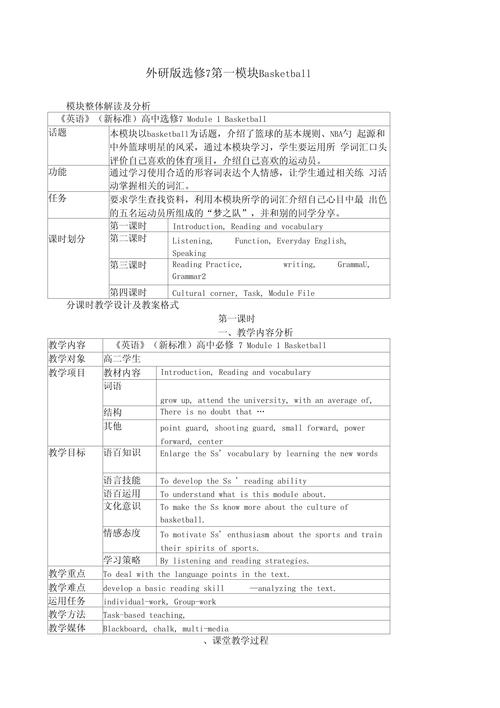
| 课程名称 | [英语电影赏析 / 商务英语入门] | 授课教师 | [姓名] |
|---|---|---|---|
| 授课对象 | 高一/高二年级学生 | 课时安排 | 1课时(45分钟) |
| 教学材料 | 自编讲义、视频片段、PPT、阅读材料 | ||
| 教学目标 (Teaching Objectives) |
语言知识目标: 掌握核心词汇(如...)、句型结构。 语言技能目标: 提高听力理解能力/口语表达流利度/写作逻辑性。 情感与文化目标: 培养跨文化交际意识/批判性思维/团队协作精神。 |
||
| 教学重点 (Key Points) |
核心词汇与表达的实际运用。 针对[具体话题]的口头或书面输出。 |
||
| 教学难点 (Difficulties) |
如何引导学生克服[口语/写作]焦虑。 深度理解[文化概念/复杂语法]并灵活运用。 |
||
| 教学方法 | 任务型教学法 (TBLT)、情景教学法、小组合作探究。 | ||
| 教学过程 | Step 1: Lead-in (导入) - 5 mins Step 2: Presentation (新授) - 15 mins Step 3: Practice (练习) - 10 mins Step 4: Production (产出) - 10 mins Step 5: Summary & Homework (总结与作业) - 5 mins |
||
| 板书设计 | (在此处画出板书结构图) | ||
| 教学反思 | (课后填写) |
第二部分:教案范例一(文化素养类)
主题:Discovering the World: A Bite of Culture (舌尖上的文化) 适用场景: 选修课、社团活动、拓展课程
教学背景分析
本课旨在通过“美食”这一通用话题,激发学生开口说英语的兴趣,高中学生具备一定的词汇基础,但在描述感官体验(味觉、嗅觉)和文化差异深度表达上仍有欠缺。
教学目标
- 知识目标: 学习描述食物口感和味道的形容词;掌握与餐桌礼仪相关的表达。
- 能力目标: 能够用英语流利地介绍一道中国传统美食;能听懂关于饮食习惯的对话。
- 情感目标: 增强文化自信,学会用英语讲好中国故事。
教学过程
Step 1: Warm-up & Lead-in (5 mins)
- Activity: Play a short clip from "A Bite of China" (BBC version or English-subtitled version).
- Question: "What is the most memorable food you have ever eaten? How would you describe it to a foreigner?"
- Purpose: Activate background knowledge and arouse interest.
Step 2: Vocabulary Building - The Flavor Profile (10 mins)
- Brainstorming: Write "TASTE" on the board. Ask students to brainstorm words (Sweet, Sour, Bitter, Salty).
- Expansion: Introduce advanced adjectives:
- Texture: Crispy (脆), Chewy (有嚼劲), Tender (嫩), Greasy (油腻).
- Flavor: Spicy/Hot (辣), Bland (淡), Savory (鲜美/咸香).
- Game: "Guess the Food." Teacher describes a food using these words, students guess.
Step 3: Listening & Cultural Comparison (10 mins)
- Material: A short interview about "British Afternoon Tea vs. Cantonese Morning Tea (Yum Cha)".
- Task: Fill in the blanks comparing the two traditions (Time, Food types, Social function).
- Discussion: "Why do you think food is important in social life?"
Step 4: Group Project - The Menu Designer (15 mins)
- Scenario: A group of exchange students is visiting your school. Design a welcome dinner menu for them.
- Requirements:
- Choose 3 dishes (must include local specialties).
- Write a short description for each dish in English (ingredients + taste).
- Explain why you chose these dishes (cultural meaning).
- Output: Each group presents their menu (1-2 minutes).
Step 5: Summary & Homework (5 mins)
- Summary: Recap key adjectives.
- Homework: Vlog Assignment. Film a 30-second video introducing your favorite home-cooked dish in English.
第三部分:教案范例二(实用技能类)
主题:Business English Basics: The Perfect Self-Introduction (完美自我介绍) 适用场景: 职业规划课、英语角、模拟面试准备
教学背景分析
高中生即将面临大学面试或未来的职场环境,自我介绍看似简单,但如何在短时间内突出亮点、展现自信,是学生急需掌握的技能。
教学目标
- 知识目标: 掌握自我介绍的结构;学习使用强有力的动词。
- 能力目标: 能够在1分钟内完成一段逻辑清晰、自信流利的自我介绍。
- 情感目标: 提升公众演讲自信,树立积极的职业形象。
教学过程
Step 1: Lead-in - The "Bad" Example (5 mins)
- Activity: Teacher acts out a nervous, mumbling, and vague self-introduction.
- Discussion: "What went wrong? What makes a bad introduction?" (Too long, no eye contact, boring).
Step 2: Deconstructing the Structure (10 mins)
- Teach the "Elevator Pitch" Formula:
- The Hook: Who are you? (Name + Current Status)
- The Meat: What are your strengths/skills? (Experience + Achievements)
- The Call: Why are you here? (Goal + Interest)
- Language Focus: Replace weak verbs (do, make, help) with strong verbs (organized, achieved, contributed, coordinated).
Step 3: Analyzing Good Examples (10 mins)
- Material: Show two scripts (one for a University Interview, one for a Part-time Job).
- Analysis: Highlight linking words and confident language.
Step 4: Practice & Peer Review (15 mins)
- Drafting: Students write their own 1-minute introduction based on a scenario (e.g., Applying for the Student Union / Applying for a Summer Camp).
- Pair Work: Read to a partner. Partner gives feedback using a checklist:
- [ ] Clear voice?
- [ ] Good structure?
- [ ] Strong verbs used?
- Refinement: Students revise their scripts.
Step 5: The "Hot Seat" Challenge (5 mins)
- Activity: Select 2-3 confident students to come to the front and give their introduction. Teacher provides immediate positive feedback and one tip for improvement.
Homework:
- Record your self-introduction and submit the audio file. Focus on pronunciation and intonation.
第四部分:设计校本课程教案的建议
- Topic-based (话题导向): 校本课程不必拘泥于语法细节,应以话题为核心(如:旅游英语、英语演讲、英语戏剧、英语歌曲赏析)。
- Interaction (互动性): 减少老师讲的时间,增加学生做的时间,每节课学生开口或动手的时间应不少于50%。
- Differentiation (分层教学): 考虑到学生英语水平参差不齐,任务设置应有梯度(如:基础任务填空,进阶任务讨论,高阶任务创作)。
- Assessment (评价方式): 校本课程的评价应多元化,不要只看分数,要看Presentation(展示)、Project(项目作品)或Portfolio(学习档案)。